



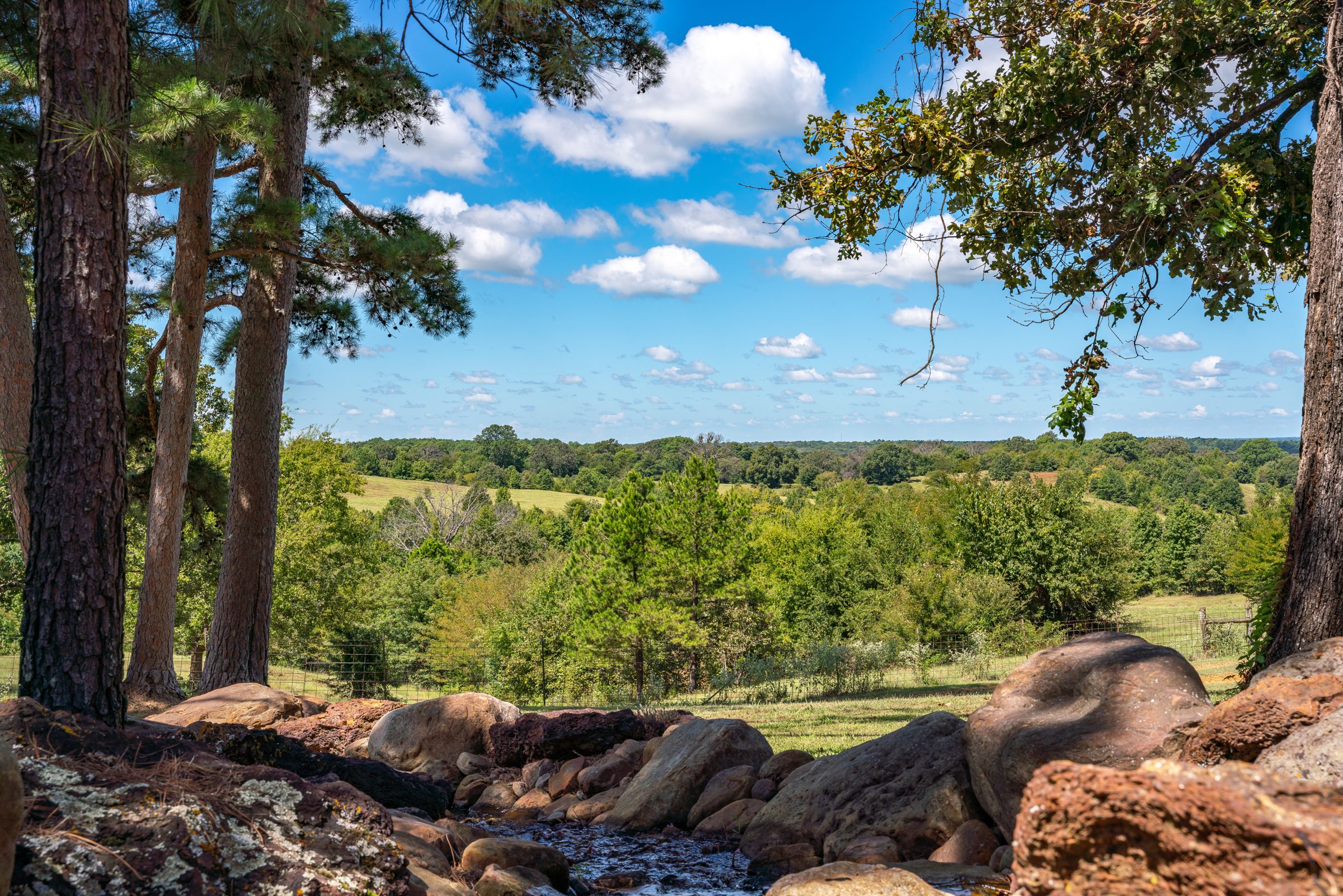
A few acres with a pond, a pasture for horses, room for a shop and nobody looking over the fence: it’s why so many buyers come to East Texas. But land isn’t bought like a house in a subdivision. The things that make a property great, or a headache, are often things you can’t see from the road.
Here’s the checklist Leslie walks buyers through before they make an offer on land or a home on acreage around Tyler, Lindale and the surrounding counties.
Before you fall in love
- Confirm legal access and the boundaries before anything else.
- Water and septic decide what you can build, and they cost real money if they’re missing.
- Mineral rights and ag valuations are Texas-specific surprises; ask early.
- Use your option period for the land’s version of an inspection: survey, well, septic and soil.
The 10-point land checklist
1. Survey and boundaries
Ask for a recent survey, and don’t assume the fence is the property line. Old fences in East Texas often wander. A survey shows the true lines, easements and any encroachments, and most lenders and title companies will want one anyway.
2. Legal access and easements
Driving onto a property isn’t the same as having the right to. Confirm the land fronts a public road or has a recorded access easement. Also look for easements that cross it: pipelines, power lines and neighbors’ driveways can limit where you build.
3. Floodplain and low ground
Check the FEMA flood map, then walk the property after a good rain if you can. Creek bottoms and low pasture can be beautiful and still unbuildable. Flood zones can also require flood insurance if you finance.
4. Water
If there’s a well, ask for its depth, age and a recent water test. If not, find out whether a water supply corporation serves the property, whether it has capacity, and what the tap fee is. Drilling a new well is possible in most places, but it’s a cost to plan for.
5. Septic
Rural homes use an on-site sewage system. Building one requires a soil evaluation and a permit through the county or its authorized agent, and some soils need an aerobic system, which costs more and needs an ongoing maintenance contract. On land with an existing home, ask for the permit and service records.
6. Mineral rights
In Texas, mineral rights are often owned separately from the surface. Many tracts in East Texas have had minerals reserved by earlier owners. Your title commitment will show reservations; read it, and ask how a mineral owner’s access could affect the surface you’re buying.
7. Ag or wildlife valuation
Land with an agricultural or wildlife valuation pays property taxes on its productive value, not its market value, and the savings can be large. The valuation doesn’t transfer automatically: you’ll need to apply with the county appraisal district and keep the qualifying use. If the use changes, for example when you build and stop grazing, rollback taxes for up to three prior years plus interest can come due. Know which side of that line your plans fall on.
8. Restrictions and zoning
Most county land has little or no zoning, but deed restrictions can still apply: minimum home sizes, limits on manufactured homes, livestock rules or bans on further subdividing. If the land is near a city, check whether it’s inside city limits or the city’s extraterritorial jurisdiction.
9. Utilities and internet
Find out how far the nearest power line is and who provides service. Extending electric service a long way down a driveway can be expensive. Ask about propane, and check internet options by address: some rural areas now have fiber, others rely on fixed wireless or satellite.
10. Financing
Land loans work differently from home loans. Expect a larger down payment and shorter terms on raw land. Farm Credit lenders specialize in rural property, and eligible Texas veterans can look at the Texas Veterans Land Board’s land loan program. Talk to a lender who does land loans before you write an offer.
Raw land or land with a home?
| Raw land | Land with a home | |
|---|---|---|
| Financing | Land loan; larger down payment, shorter terms | Conventional, VA, FHA or USDA mortgage, depending on the property |
| Water and septic | You install them, budget for both | Already in place; inspect and test them |
| Move-in timeline | Months to over a year to build | As soon as you close |
| Flexibility | Build exactly what you want, where you want it | Faster and simpler, but you’re working with what’s there |
Use your option period. The Texas farm and ranch contract lets you pay an option fee for a set number of days in which you can walk away for any reason. Schedule the survey, well test, septic inspection and any soil work inside that window.
Questions to ask the seller
- When was the property last surveyed?
- Is the ag or wildlife valuation in place, and what’s the qualifying use?
- Are any minerals reserved, and is there an active lease?
- Has the property flooded, and where does water stand after rain?
- Where are the well, septic system and property corners?
- Are there any easements, verbal agreements or shared roads?
- What stays: equipment, livestock panels, hay, gates?
Common questions
How much land do I need for horses?
It depends on the pasture, but many owners plan on at least one to two acres of good grazing per horse, plus room for a barn and paddock.
Can I put a manufactured home on rural land?
Often yes, but check the deed restrictions first. Many East Texas tracts allow them; many subdivisions on acreage don’t.
Do I need a survey if the seller has one?
Usually you’ll want a current one. Lenders and title companies often require a recent survey, and an old one may not show newer fences or improvements.
Looking for land in East Texas?
Leslie helps buyers find acreage around Tyler, Lindale and beyond, and knows what to check before you commit.
See acreage and land